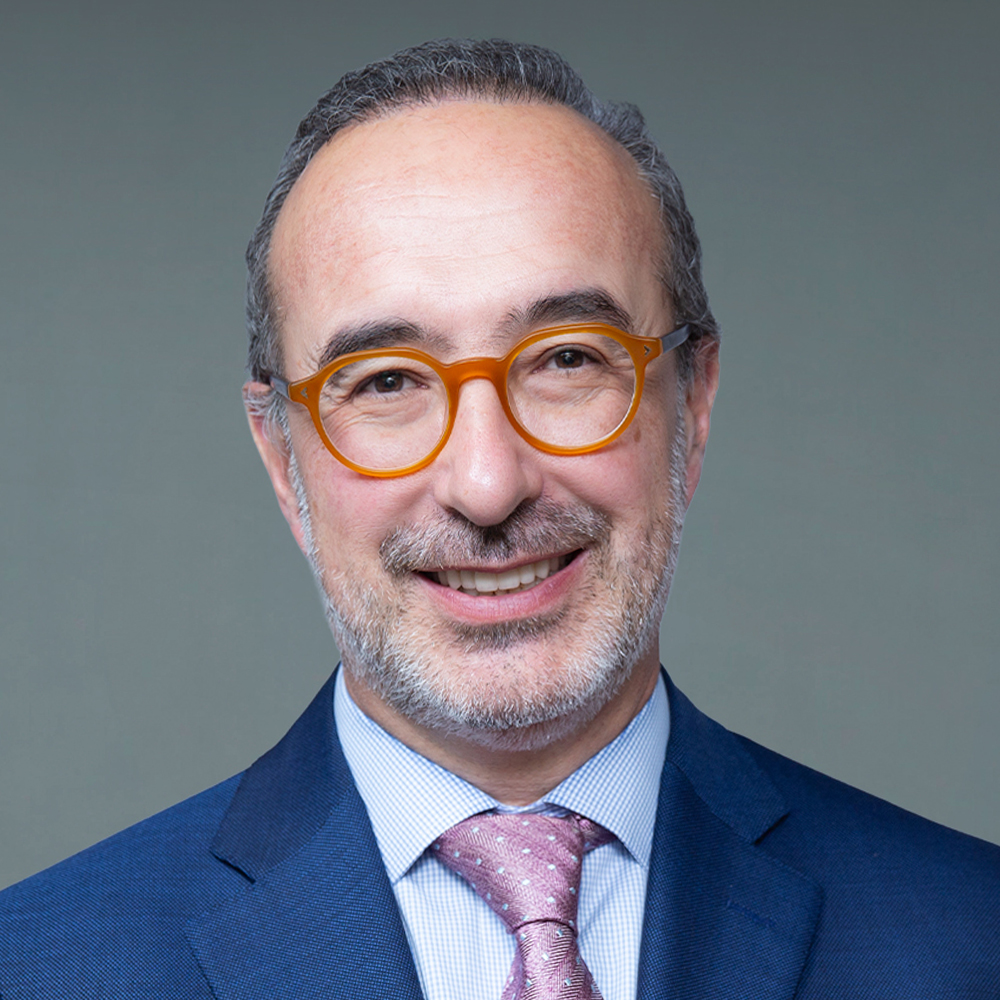


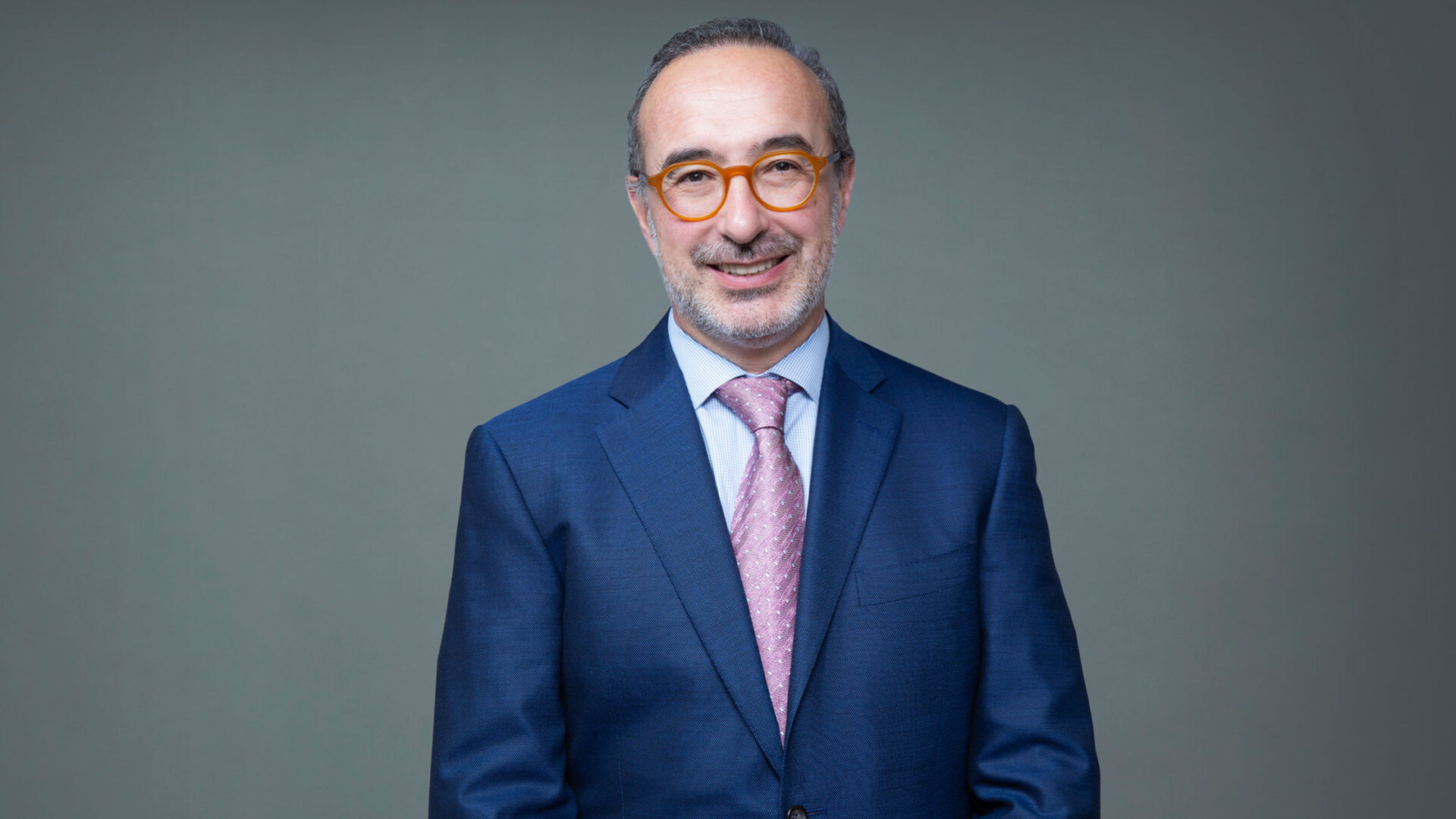
World-renowned translational oncologist and clinical trial investigator, Manuel Hidalgo Medina, MD, PhD, has joined NYU Langone Health as co-director of the new Gastrointestinal (GI) Cancer Center at Perlmutter Cancer Center. Dr. Hidalgo will lead efforts to drive discovery from the lab to the clinic across multiple GI disease areas alongside Anirban Maitra, MD, focusing on building robust infrastructure for therapeutic development, investigator-initiated trials, and biomarker-driven studies.
Dr. Hidalgo brings extensive leadership experience from esteemed institutions, including the Beth Israel Deaconess Medical Center, Weill Cornell Medicine/New York-Presbyterian Hospital, and the Spanish National Cancer Research Center in Madrid. He has also previously collaborated with Dr. Maitra while at Johns Hopkins University as director of the Gastrointestinal Oncology Program.
Here, Dr. Hidalgo discusses his role at the new GI Cancer Center and the unique opportunities NYU Langone offers for driving research and treatment innovation.
Physician Focus: What drew you to NYU Langone and this leadership role?
Dr. Hidalgo: The scope of NYU Langone’s integrated multidisciplinary healthcare system presents an important opportunity and responsibility. At NYU Langone, there’s already an amazing body of work and infrastructure for GI cancers. We are unique, particularly in GI cancer, because of the large network of gastroenterologists, radiologists, and surgeons in our system. Dr. Maitra and I will bring some of those areas together to identify where we can develop additional projects that are connected to the needs of our patients and communities. Alec C. Kimmelman, MD, PhD, described our role at this new center as “the glue,” and Dr. Maitra and I are happy to help implement those initiatives.
“In an environment such as NYU Langone, just by coming together, organizing projects, and optimizing operations, we have the opportunity to make a huge difference.”
Manuel Hidalgo Medina, MD, PhD
In an environment such as NYU Langone, just by coming together, organizing projects, and optimizing operations, we have the opportunity to make a huge difference for scientific discovery and GI cancer care.
Physician Focus: Can you expand on your expertise and what you are most proud to have accomplished in your previous roles?
Dr. Hidalgo: From my leadership roles in both the U.S. and Spain, I’m most proud of our collective work to discover and develop new standard of care agents for patients with GI cancer, particularly pancreatic cancer. I have led the early clinical development of more than 50 new anticancer agents including erlotinib, temsirolimus, and nab-paclitaxel.
But my most significant contribution has been pioneering patient-derived xenograft (PDX) models for drug screening, biomarker development, and personalized medicine in pancreatic ductal adenocarcinoma. These have since been popularized as preclinical models for cancer by academia, pharma, and government agencies. Dr. Maitra and I worked together on this initiative at Johns Hopkins. Using PDX models, we demonstrated nab-paclitaxel’s efficacy in pancreas cancer, which paved the way for clinical studies that led to approval of the drug.
Physician Focus: What are your top goals as co-director of the GI Cancer Center?
Dr. Hidalgo: A major priority is developing a robust clinical trial program that addresses innovation. We want to open trials that are game changers for patients and springboards for young investigators to advance their careers.
“We want to open trials that are game changers for patients and springboards for young investigators to advance their careers.”
Prevention and interception are other major goals. With NYU Langone’s large, integrated health system, we have the opportunity to identify patients at high risk for cancer and intercept and block the process. The first project we’ve submitted is a clinical trial to investigate certain drug inhibitors that prevent pre-malignant lesions from evolving to full cancers.
Physician Focus: Of the advances underway for GI cancer, what excites you the most?
Dr. Hidalgo: The most exciting research is in KRAS inhibitors. In pancreatic cancer, we have not made significant progress over the past 30 years, but for the first time, we’re on the verge. I predict KRAS inhibitors will very soon change the way we treat pancreatic cancer.
Immunotherapy is another important area. Many GI cancers, particularly with liver metastasis, don’t respond well to immunotherapy. We want to understand the basis for this treatment resistance and develop interventions and strategies to address it.