
Referral Notes:
- At NYU Langone, women comprise 30 percent of the urology faculty, 40 percent of the residents, and hold many key leadership positions.
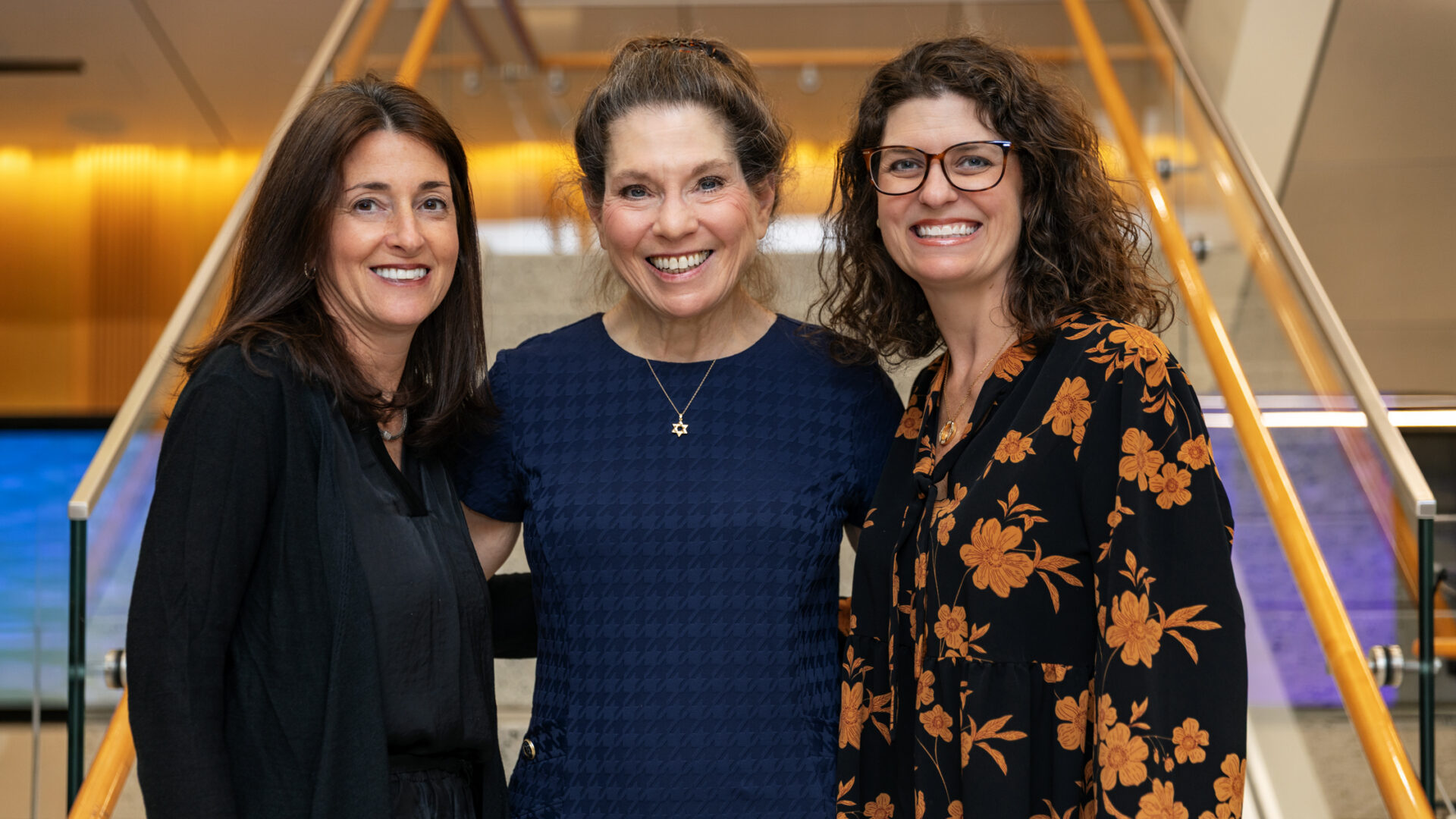
- Among those leaders, Ellen Shapiro, MD, has mentored nearly 100 resident trainees during her 32-year tenure as chief of pediatric urology; Jamie A. Kanofsky, MD, is among the roughly one-quarter of U.S. urology residency directors who are women; and Katie S. Murray, DO, helped found the Women in Urologic Oncology network.
- Together, they exemplify the culture of mentorship and leadership that helps aspiring female urologists see a clear path in the field.
As of 2025, women account for nearly 12.9 percent of the urology workforce in the U.S., up from 7.7 percent in 2015. While encouraging, these statistics also highlight the specialty’s persistent gender gap and the need to continue expanding pathways that attract, support, and retain talented physicians.
Critical to that effort are mentorship, visibility, and leadership opportunities. NYU Langone has distinguished itself as a leader in advancing women in urology: women comprise 30 percent of the faculty, hold many of the department’s prominent leadership roles, and serve the medical school in varying capacities. These leaders also serve as influential mentors and role models, particularly for the 40 percent of NYU Langone urology residents who are women.
Among them are Ellen Shapiro, MD, past director of pediatric urology, Jamie A. Kanofsky, MD, director of the urology residency program, and Katie S. Murray, DO, chief of the urology service at Bellevue Hospital Center. Together, they have held leadership positions in major professional societies, contributed extensively to the advancement of the field, and helped foster a culture that supports all aspiring urologists.
Among the First
The highlight of her early career, Dr. Shapiro says, was being the first women in over 80 years to be accepted into the urology residency program of the Johns Hopkins Brady Urological Institute. She notes that she was also the first female fellowship-trained pediatric urologist in the U.S.
“I was fortunate to be exposed to urology while a clinical associate at the National Cancer Institute, since women did not rotate in urology at my medical school or at Johns Hopkins when I was a surgical intern and resident,” she says.
“In my early years after medical school, being the only one in the room who looked like me was pretty lonely,” Dr. Shapiro says. “In fact, I was the only female in my surgical intern class at Johns Hopkins. Years later, I was still the first female urology faculty member at three academic institutions. Now, with women comprising about 30 percent of the urology faculty at NYU Langone, our residents and medical students have a broader variety of role models of excellence.”
A Matter of Representation
Dr. Kanofsky was among those who took notice of the growing representation when she started her own residency at NYU Langone in 2002. “The more people who look like you and the more representation there is, the more interested you become,” she says.
“The more people who look like you and the more representation there is, the more interested you become.”
Jamie A. Kanofsky, MD
The research literature backs this claim. NYU Langone’s urology residency program is among the nearly 25 percent of U.S. urology residency programs led by a woman, and programs with female directors tend to attract more female residents than programs led by men.
The rise in female urologists is increasingly important as more women seek specialty care for urologic conditions, Dr. Kanofsky adds. “There is such a need now for female urologists to treat female patients,” she says. “We’ve taken over a lot of what gynecology had traditionally done because the urinary tract is our focus.”
Both Dr. Kanofsky and Dr. Murray say they were drawn to the specialty due to the technical challenge of performing surgeries, the wide variety of cases, and the long-term patient relationships. “I love that continuity of care and I appreciate being able to treat patients with both medicine and surgery,” Dr. Kanofsky says. “Urology is unique because it’s a field that truly blends both.”
Dr. Murray likewise believes the surgical specialty offers the best of both worlds: “I like working with my hands and operating,” she says. Her deepest satisfaction, though, has come from caring for her patients, particularly those with bladder cancer, her specialty. “I’m most proud of the relationships I’ve built with my patients over time,” Dr. Murray says. “I’m able to make them comfortable and provide empathy and compassion throughout their cancer journey.”
Lifting Up the Next Generation
As they’ve progressed in their careers, the three leaders are paying it forward by helping to advance the careers of the next generation. “I have gained tremendous personal satisfaction from mentoring nearly 100 residents while serving as chief of pediatric urology and following their successful careers,” Dr. Shapiro says.
“I have gained tremendous personal satisfaction from mentoring nearly 100 residents while serving as chief of pediatric urology.”
Ellen Shapiro, MD
The department has also launched hands-on mentorship programs and workshops that introduce urology to underrepresented groups across the high school, college, and medical student levels. “I think that has been important in attracting more women and other underrepresented minorities to the field,” Dr. Shapiro says.
As residency program director, Dr. Kanofsky brings the unique perspective of someone who’s trained in the same program she now leads. “I understand a lot of what they’re going through,” she says. “Many of the faculty members here today were my attendings when I was a resident. As a former trainee in this program, I know where the program started and what we are planning for the future. I think the residents can appreciate that I shared their same experiences and am always trying to make improvements.”
Dr. Murray similarly dedicates herself to mentoring urologists, advancing the field, and building global networks. “I enjoy giving back to my urology colleagues and future urologists,” she says. As a founding member and current chair of the Society of Urologic Oncology’s Women in Urologic Oncology, for example, Dr. Murray is helping to advance the recruitment, retention, and promotion of women and foster more diversity, equity, and inclusion throughout the field.
“They’re not just seeing us as surgeons or doctors, they’re also seeing us as leaders within NYU Langone and leaders within our national and international organizations.”
Katie Murray, DO
Younger urologists are taking notice. “It’s nice for our students and residents to say, ‘I can do this. I can be like Dr. Kanofsky or Dr. Shapiro or Dr. Murray. But I think we’ve taken it a step beyond that,” Dr. Murray says. “They’re not just seeing us as surgeons or doctors, they’re also seeing us as leaders within NYU Langone and within national and international organizations.”
The ultimate reward, the three physicians agree, is seeing those urologists realize their own goals and emerge as new leaders in the field. “Sometimes it takes years before seeing that end result, but that’s what makes all the daily work worth it,” Dr. Murray says.