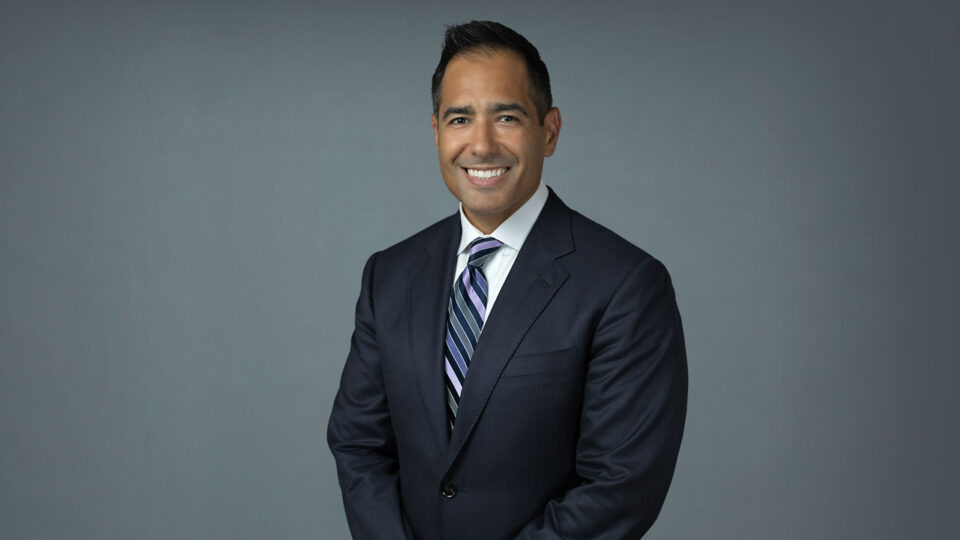


Though GLP-1 receptor agonists have existed for two decades, newer, more effective versions have transformed obesity care within just a few years—enabling 15 to 20 percent weight loss compared to the 5 percent with earlier generations. Yet with the swiftness of these therapies’ arrival, most physicians lack access to evidence-based training on how to prescribe them effectively and safely. Michael A. Weintraub, MD, an endocrinologist and obesity medicine specialist at NYU Langone Health, is working to change that through a new NEJM Group course, Advancing Obesity Care—and by reframing how obesity medicine is practiced.
Here, he discusses the structure and focus of the NEJM Group course, shares his early experience prescribing oral semaglutide, and highlights how novel agents in development are poised to further expand access and reshape the rapidly evolving obesity treatment landscape.
Physician Focus: As co-chair of the Endocrine Society’s in-development clinical practice guideline on Pharmacologic Management of Obesity, you were approached by NEJM Group to develop this first-of-its-kind obesity care course. What told you the time was right for this training?
Dr. Weintraub: The need was urgent and clear. We’ve had a gap between what obesity medicine specialists know and what primary care doctors—who treat most patients with obesity—are equipped to do. I was getting calls frequently from colleagues saying, “I have patients asking about these medications, and I don’t know how to appropriately guide them.”
“Obesity isn’t a moral failing—it’s a chronic, progressive, relapsing biological disease that requires chronic management, just like diabetes or hypertension.”
Michael A. Weintraub, MD
Another layer makes this even more urgent: Obesity is still treated differently from other chronic diseases. There’s still enormous stigma and bias against patients. Obesity isn’t a moral failing—it’s a chronic, progressive, relapsing biological disease that requires chronic management, just like diabetes or hypertension. Many primary care doctors still operate from the mindset that patients just need to move more and eat less. That’s not how we treat other chronic conditions, and it needs to evolve.
Physician Focus: What does the course cover?
Dr. Weintraub: We’ve designed it for busy clinicians with three, 20-minute microlearning modules. The first addresses diagnosis and equity—how do we recognize our own weight bias, and improve access to obesity care in underserved communities?
The second is about evaluation and shared decision-making. We teach clinicians how to assess three categories of obesity complications: metabolic, physical, and mental. The third module covers the data on how these medications improve comorbidities—heart disease, liver disease, heart failure, sleep apnea, even osteoarthritis.
Physician Focus: Let’s talk about the landscape of GLP-1 options currently available to patients. In addition to injectable semaglutide and tirzepatide, the FDA recently approved an oral version of semaglutide. How do these options compare?
Dr. Weintraub: These new medications are game-changers, but they’re not one-size-fits-all. We need options for different patients and different situations. Oral semaglutide is comparable to injectable versions in terms of weight loss and side effects; effectiveness depends on blood concentration of the drug.
The challenge with creating oral peptides is they’re broken down in the gastrointestinal tract. A new technology utilizes a permeation enhancer that allows full absorption. But there are practical downsides: it must be taken on an empty stomach with only a few ounces of water, and no other medications for 30 minutes afterward. That’s complicated for patients on levothyroxine or calcium, as those medications also require strict spacing.
If someone can tolerate a once-weekly injection, I often recommend that instead. But oral semaglutide does have value for injection-hesitant patients. It expands our toolbox for personalized treatment.
Physician Focus: What novel treatment options on the horizon are you most excited about?
Dr. Weintraub: Orforglipron is a small molecule—not a peptide—currently in phase 3 trials, likely to be approved by the end of 2026. Because it is a non-peptide molecule, it doesn’t require empty-stomach dosing. Importantly, small molecules are cheaper to manufacture and transport than injectable peptides, so this could significantly expand access—our biggest barrier right now.
There’s also retatrutide, a triple agonist with even greater weight loss potential—surpassing 28 percent on average. And for patients who can’t tolerate GLP-1 side effects, emerging amylin analogs like eloralintide could offer an alternative mechanism with fewer side effects.
“I have patients whose health would benefit enormously from these drugs, but they cannot afford them at an average out-of-pocket cost of $450 per month. That’s an access challenge in obesity treatment.”
Physician Focus: What has surprised you most about prescribing these medications?
Dr. Weintraub: The access challenge. I have patients whose health would benefit enormously from these drugs, but they cannot afford them at an average out-of-pocket cost of $450 per month.
The other surprise is the heterogeneity in therapeutic response. Some are “super responders” who lose tremendous weight on low doses. Others either can’t tolerate the gastrointestinal side effects or don’t lose weight, regardless of dose.
Studies show we can only explain up to 10 percent of this variability in treatment response. We know men lose less weight than women, and paradoxically, people with diabetes also lose less weight. We have enormous gaps in our understanding of why people respond so differently to the same medication—which is why having multiple treatment options with different mechanisms matters.