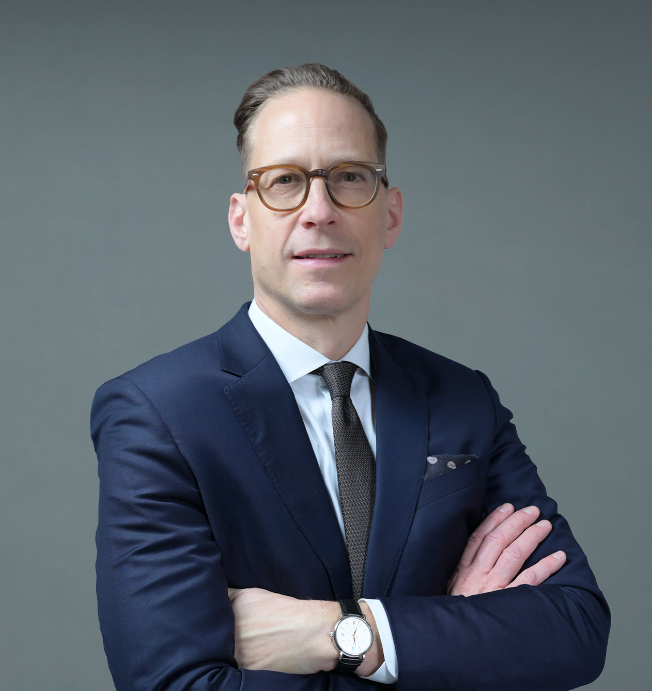

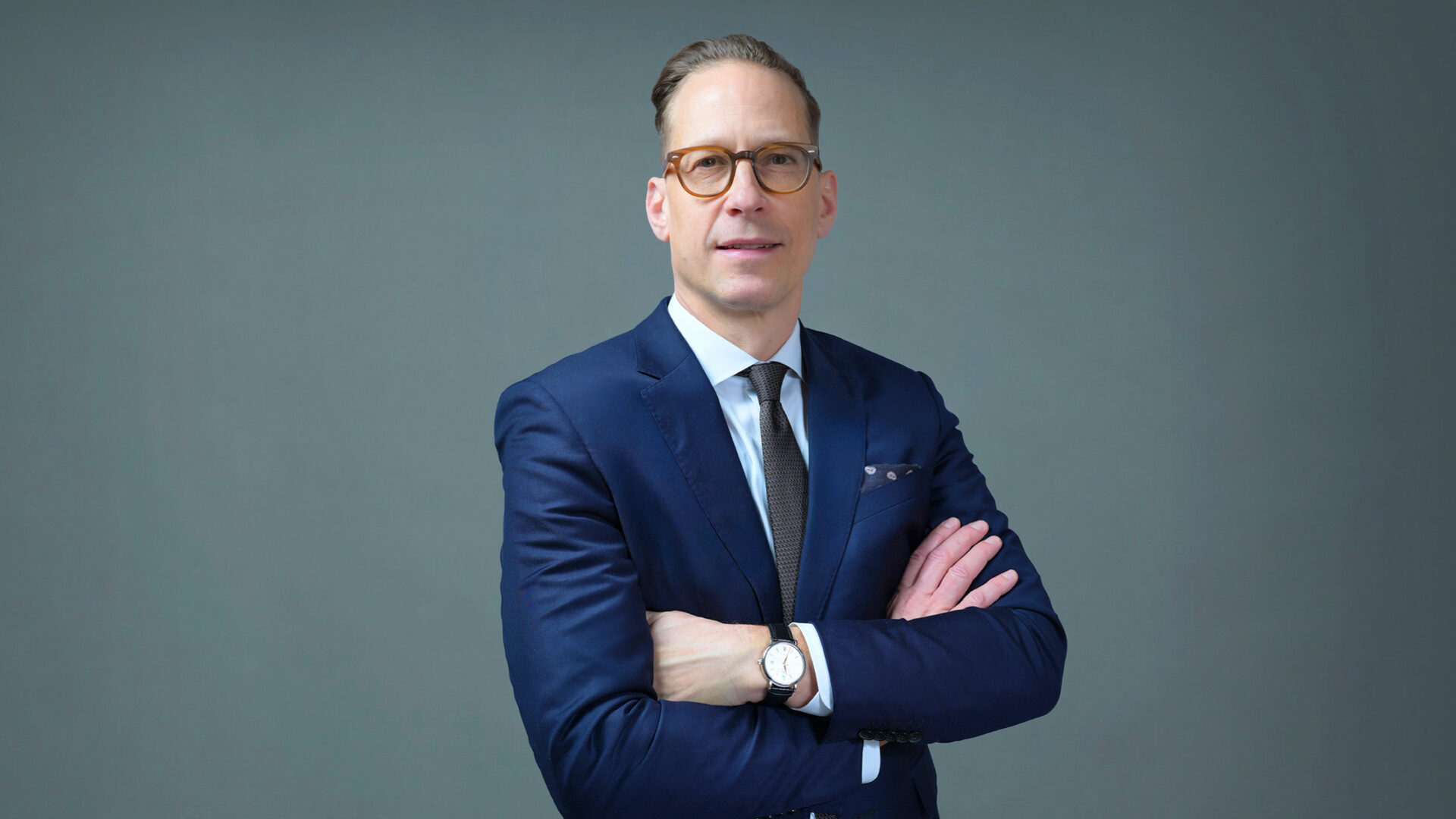
Internationally recognized expert in skull base and pituitary surgery, Paul A. Gardner, MD, has joined NYU Langone Health as vice chair of clinical innovations for the Department of Neurosurgery and director of the Skull Base Laboratory and the Skull Base Surgery Center.
Known for pioneering minimally invasive endoscopic approaches and advancing the molecular understanding of skull base tumors, Dr. Gardner shares his vision for surgical innovation and collaborative care.
Physician Focus: What inspired your path toward neurosurgery and, more specifically, skull base surgery?
Dr. Gardner: I was always fascinated by the nervous system and its circuitry—the idea that you can determine what is affecting someone by observing how that circuitry behaves. I’m also a lifelong pianist, and was drawn to a surgical field where I could apply that affinity for precision and working with my hands.
Later, I was fortunate to complete my medical training at the University of Pittsburgh Medical Center, where endoscopic skull base approaches were first being developed. Working alongside pioneers like Carl Snyderman, MD—as one of the first trainees in those early techniques—I saw firsthand how the new approaches could redefine how we treat some of the most challenging tumors in medicine.
“I’m also a lifelong pianist, and was drawn to a surgical field where I could apply that affinity for precision and working with my hands.”
Paul A. Gardner, MD
Physician Focus: You helped establish one of the leading skull base programs at the University of Pittsburgh. What drew you to this new leadership opportunity at NYU Langone?
Dr. Gardner: It was the team here; NYU Langone has a some of the world’s top skull base surgeons together in one place—leaders like Chandra Sen, MD, Donato R. Pacione, MD, Carlos D. Pinheiro Neto, MD, neurosurgery chair John G. Golfinos, MD, and the entire neuro-otology division, led by J. Thomas Roland Jr., MD. Patients have better outcomes when skull base surgery is practiced not as a solo endeavor but as a team, and I’m excited to join this incredibly capable and coordinated team.
The institutional commitment to multidisciplinary care and academic innovation at NYU Langone also stands out—and it starts at the top, where the same leader helms both the medical center and medical school. The academic mission is completely aligned with the medical mission, and you just don’t see that degree of alignment anywhere else.
My goal is to build on all of these strengths—to bring my expertise in skull base approaches from one powerhouse program to another, join an already top-notch team, and lead us to new levels of research, education, and clinical excellence.
Physician Focus: Can you tell us about your research and how it’s helping move skull base surgery forward?
Dr. Gardner: Improving skull base surgery means both improving the mechanics of surgery and identifying the molecular drivers of disease.
“As skull base surgeons, the question is always: How do we disturb this system as minimally as possible?”
As skull base surgeons, the question is always: How do we disturb this system as minimally as possible? That means different things for different tumors: innovating a unique endoscopic corridor for one or refining an open approach for another. My research aims to map specific surgical approaches with outcomes, while also studying skull base anatomy in a laboratory setting to develop entirely new approaches. The goal is to continually refine our techniques, expand our surgical options, and improve decision-making to make skull base surgery safer and less invasive for every patient.
More recently, my work has expanded to studying the molecular and genetic underpinnings of skull base tumors. For example, my team identified genetic mutations in rare chordoma tumors that could help predict which patients may benefit from additional therapy and which may safely avoid aggressive radiation treatment. We’ve also investigated how hormone exposure, such as the long-term use of injectable contraceptives, may drive the growth of meningiomas. These insights help us move beyond the question of how to simply remove a tumor from the anatomy, toward tailoring treatments based on the tumor’s biology.
Physician Focus: What is your secret to rapid innovation within skull base surgery, and how will that shape your initial goals as vice chair of clinical innovations?
Dr. Gardner: It’s that close collaboration I mentioned; our entire skull base program is aligned to collaborate in a way that is best for the patient.
We have world-class experts in oculoplastics, ENT, and neurosurgery, and each specialist brings their strength to the right case to ensure safer, more-precise surgery and faster recovery. That’s what true collaboration looks like: every step of the operation managed by the person best trained for it.
“When people think of skull base surgery in New York, I want them to think of NYU Langone—not because of one surgeon, but because of the strength of the team.”
There’s strong evidence that this model improves outcomes. At centers where endocrinologists and surgeons work closely together in a high-volume, multidisciplinary setting, patients do better. I’d like to build on that model at NYU Langone and provide evidence showing the value of this premier, unified center.
We’ll also continue to advance techniques that make skull base surgery less invasive and more effective. One example from my research involves a novel surgical route that approaches deep areas of the skull base from opposite directions—using a minimally invasive transoral technique with a traditional open approach. The study showed that by combining those approaches, we could more efficiently and safely target the area.
That’s the kind of innovation I’m excited to continue here, with anatomical study, clinical research, and surgical expertise pushing the field forward. When people think of skull base surgery in New York, I want them to think of NYU Langone—not because of one surgeon, but because of the strength of the team.