

As an increasingly key part of comprehensive care for neurology patients at NYU Langone Health, the Division of Neurogenetics and the Kellar Family Division of Movement Disorders are expanding their expertise in genetic diagnostics, test interpretation, and counseling. The divisions are building a large team of subspecialists who know which tests to order, how to interpret them, and how to guide patients through the results. Aided by collaborations with the Division of Child Neurology, the Center for Human Genetics and Genomics, and industry and nonprofit partners, the divisions aim to propel the discovery and application of life-changing genetic advances.
Here, Nicolas J. Abreu, MD, associate director of the neurogenetics division and director of the Lysosomal Storage Disease Program, and Giulietta M. Riboldi, MD, PhD, director of the Marlene and Paolo Fresco Institute for Parkinson’s and Movement Disorders, discuss how the growing field has already made its mark. They also look ahead to what’s on the horizon and how they’re laying the foundations for future breakthroughs.
Physician Focus: Why is neurogenetics such an important part of neurology right now?
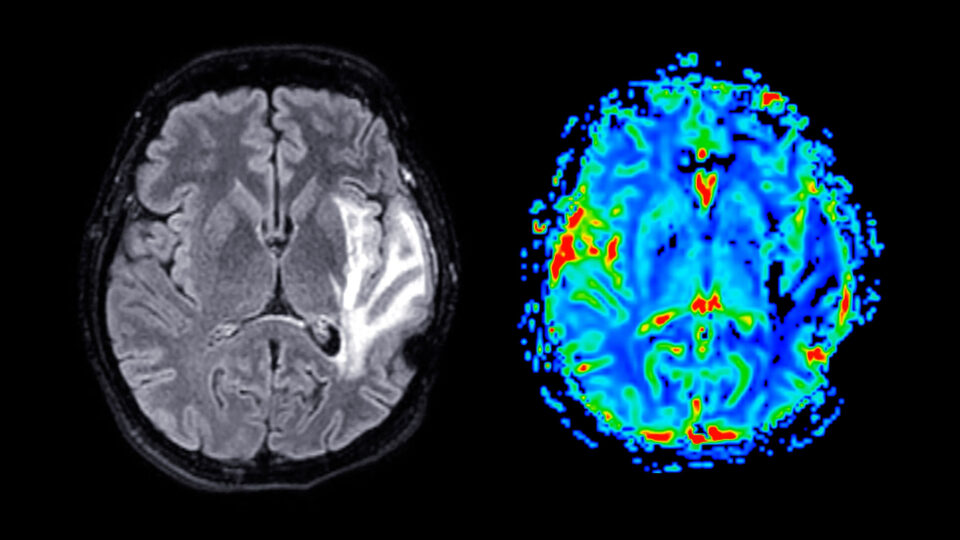
Dr. Abreu: Neurogenetics involves both the diagnosis of rare neurological disease, usually as a result of changes in the genome, as well as the management thereafter. The field fuses continued advances in genomic diagnostics with careful phenotyping of the patient from specialized exams, neuroimaging, and electrophysiological studies. With genetic diagnoses, we are able to provide comprehensive counseling regarding diagnosis, prognosis, recurrence risk, medical surveillance, disease-specific resources, and recommendations in terms of medical management.
“We’re now able to provide answers for a significant subset of individuals who previously had none.”
Nicolas J. Abreu, MD
We’re recognizing the vast numbers of individuals with multiple health problems, disabling neurological symptoms that are difficult to control, or developmental difficulties that are significant and unexplained. Through these new technologies, we’re now able to provide answers for a significant subset of individuals who previously had none.
Dr. Riboldi: Because it’s such an important part of neurology, it’s becoming more and more crucial to further develop the neurogenetics expertise of clinicians—from the clinical perspective and the genetic perspective. For movement disorders, the evaluation of the patient’s clinical presentation is crucial to define the phenotype and guide the type of testing to seek.
Physician Focus: Dr. Riboldi, how has neurogenetics aided your clinical work on movement disorders?
Dr. Riboldi: We are now able to genetically diagnose some of the patients with rare movement disorders. Neurogenetics is also becoming crucial in predicting response to available treatment. For example, there are genetic forms of dystonia that respond well to deep brain stimulation. Although this treatment is invasive, when we have evidence that there are gene mutations causing the symptoms, we’re more confident in moving forward with it.
Neurogenetics is also opening new treatment avenues. Current treatments for Parkinson’s disease are symptomatics. Some of those work really well, but they’re not stopping disease progression. There are now several clinical trials, ongoing or in the pipeline, targeting specific genetic mutations such as those in the GBA1 gene or molecular mechanisms related to the genetic changes. These could be transformative in developing treatments that are not just symptomatic.
For counseling, identifying a pathogenic change offers information about the risk that other family members may develop the same disease.
- Read our interview with Dr. Riboldi on her vision for the Fresco Institute.
- Explore a case report on Dr. Abreu’s diagnosis of a toddler with RHOBTB-Related Disorder, an exceedingly rare neurogenetic condition.
Physician Focus: Dr. Abreu, what advances in neurogenetics do you see as most promising?
Dr. Abreu: I would point to three areas. One is the movement towards advanced genomic technologies and the switch from single-gene or panel-based testing to comprehensive testing. The field is moving towards genome sequencing, which is increasingly available on a clinical basis to catch different types of genetic changes that are causative.
Separately, the population undergoing genetic testing is changing from individuals with advanced disease to individuals who either have a positive family history or are undergoing genetic testing through newborn screening pilot programs. The ability to increasingly identify individuals before the onset of disease, with a longer period to intervene or create a treatment plan that may completely alter the course of disease, is quite exciting.
The third area is gene-based therapies, of which there are many varieties. There have been tremendous advances in the ability to treat the underlying genetic mechanism, whether it’s gene addition, gene silencing, genetic modulation, or gene editing.
Physician Focus: How are your teams preparing for the new opportunities and challenges in neurogenetics?
Dr. Riboldi: We are investing and expanding within the Division of Movement Disorders, with a focus on building a clinical team with deep expertise in this area. This includes hiring a dedicated genetic counselor. Her added expertise not only improves patient care but also helps us take the next step in educating and training other colleagues, including trainees and fellows.
We’re also expanding collaborations with other centers, groups, and research programs to help advance these genetic discoveries.
“It’s becoming more and more crucial to further develop the expertise of clinicians—from the clinical perspective and the genetic perspective.”
Giulietta M. Riboldi, MD, PhD
Dr. Abreu: Collaboration with patient and family foundations has been critical too. For us, the Batten Disease Support, Research, and Advocacy Foundation and their Centers of Excellence Program has been critical in helping mobilize our work specifically in the care of individuals with Batten disease. We’re also working with several groups in lysosomal disorders, including the National Fabry Disease Foundation.
We’re also engaging with industry to ensure we have access to the latest and most innovative clinical trials.