
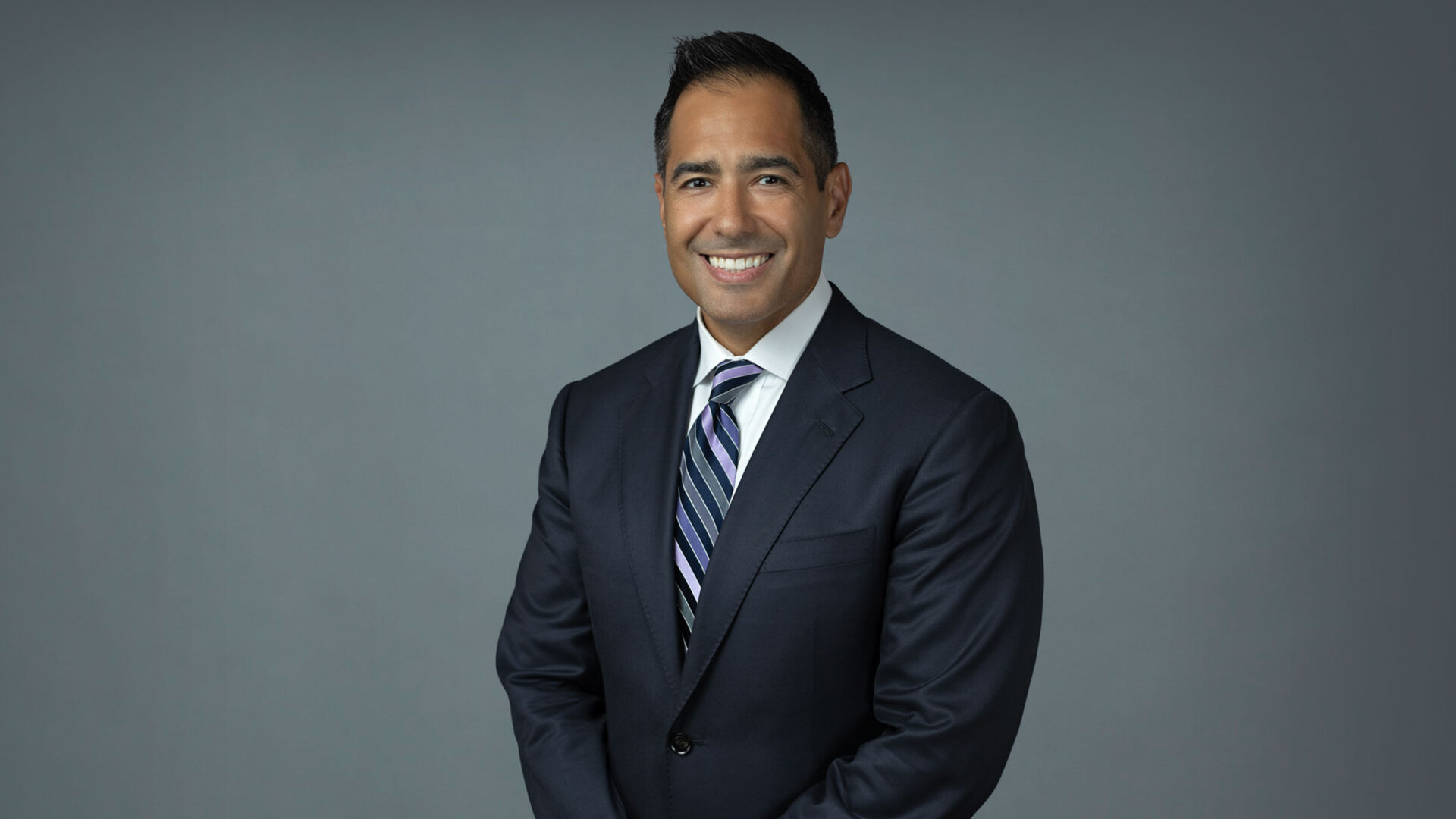
Endocrinologist Marcus D. Goncalves, MD, PhD, a nationally recognized expert in cachexia and muscle-wasting diseases, has recently been appointed director of NYU Langone Health’s Holman Division of Endocrinology, Diabetes, and Metabolism.
Dr. Goncalves brings extensive clinical and research experience to the role, with a distinguished career dedicated to advancing the care of complex metabolic issues linked to cancer, heart and lung disease, and other chronic issues. His leadership follows that of internationally renowned lipid disorders specialist Ira J. Goldberg, MD.
Here, Dr. Goncalves discusses how the division is evolving to meet changing clinical needs—expanding programs in diabetes, metabolic bone disease, and pituitary disorders—while building strong, sustainable basic-to-translational research initiatives. He also shares insights on a key challenge in the field and how his team is addressing it.
Physician Focus: How do you see the field of diabetes and endocrinology evolving over the next 5 to 10 years, and how is NYU Langone preparing for those changes?
Dr. Goncalves: One of the biggest evolutions that we’re currently in the midst of is the introduction of GLP-1 receptor agonists, which have fundamentally changed how we treat obesity and its related complications, including diabetes.
The pace of innovation in this space is extraordinarily rapid. We are expanding our diabetes and obesity programs to help patients access these medications and provide expert guidance, and we are increasingly seeing individuals move from overt diabetes into a prediabetic state or even remission.
“Metabolic bone disease is another area that’s rapidly evolving. As the population ages, the demand for care continues to grow. At the same time, treatment is becoming more complicated.”
Marcus D. Goncalves, MD, PhD
Osteoporosis and metabolic bone disease is another area that’s rapidly evolving. As the population ages, the demand for care continues to grow. At the same time, treatment is becoming more complicated, with new biologic agents, specialty pharmacy requirements, and infusion-based therapies. That’s why one of our priorities is to build out a dedicated metabolic bone disease center capable of delivering the coordinated, high-level care these patients require.
Pituitary disease is another area that’s highly complex, with rapid innovation in minimally invasive approaches significantly improving care. As a health system, we are investing in the multidisciplinary expertise to treat these conditions, including with the recent recruitment of neurosurgeon Paul A. Gardner, MD, to lead the Skull Base Surgery Center.
Physician Focus: One of your top priorities is to build systems that support basic-to-translational research. What does that look like in practice?
Dr. Goncalves: Across the division, we already have examples where basic, translational, and clinical research are working together effectively. In those settings, discoveries at the bench are directly informing patient care, and clinical insights are feeding back into research questions. However, in many areas, that integration still depends on a small number of individuals carrying multiple roles, which is not a sustainable model over the long term.
My goal is to build durable, team-based programs in which responsibility is distributed across investigators with complementary expertise—basic scientists, translational investigators, and clinical trialists—who are intentionally connected through shared infrastructure, regular communication, and common goals. Toward this goal, a key focus is strategic recruitment—bringing in new investigators to help fill exiting gaps.
As a whole, this approach will not only advance science and improve patient care but boost the mentorship of trainees and early-career faculty interested in translational research.
Physician Focus: What do you see as one of the biggest challenges facing diabetes and endocrinology today, and how can work within the division help address it?
Dr. Goncalves: One of the biggest challenges is delivering equitable, effective diabetes care at scale. Managing diabetes well requires far more than prescribing medications—it requires access, education, social support, and systems that ensure patients are taking their medications properly and benefitting from them.
One way our division is addressing this challenge is by strengthening collaborations with population health experts, including Lorna E. Thorpe, MPH, PhD, and Nadia S. Islam, PhD, who are uniquely positioned to engage communities and address disparities.
“One of the biggest challenges is delivering equitable, effective diabetes care at scale.”
Another area of focus is improving how we use data. For example, continuous glucose monitoring provides near real-time insight into patients’ glucose levels, but right now much of that data sits in silos—on desktops or in the cloud—without meaningful integration into the electronic medical record (EMR). If we can integrate that data, it opens enormous opportunities for earlier intervention, predictive modeling, and even AI-driven care.
Instead of reacting months later with medication changes, we could detect concerning trends as they emerge and intervene with targeted outreach or education. I think this is an area where we could truly innovate and potentially change practice more broadly.
Physician Focus: Who has been a key influence in your career and what lessons did they impart that stick with you today?
Dr. Goncalves: I’ve been incredibly fortunate to have outstanding mentors. Renowned biochemist and cancer biologist Lewis C. Cantley, PhD, taught me how to lead—how to run a lab, give people independence, push them toward success, and support them continuously. Rexford S. Ahima, MD, PhD, a physician-scientist and endocrinologist, loved research and science and instilled that spirit in me.
Clinically, Ira J. Goldberg, MD, has been a huge inspiration. His ability to teach fellows, care for patients, and do research—all at a high-level and over decades—is something I deeply admire. I’m very happy to be following in his footsteps.