

Gastroenterologists Jessica Widmer, DO, and Galen Leung, MD, are among the first experts in the United States to begin using a newer, more sophisticated form of endoscopic ultrasound-guided gastroenterostomy (EUS-GE) to treat gastric and intestinal luminal outlet obstructions.
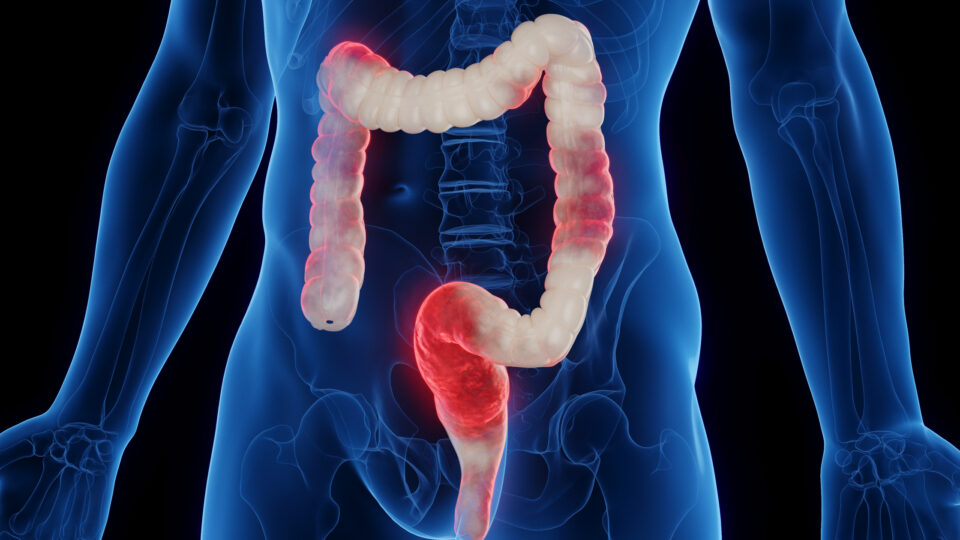
Addressing these obstructions, which can leave patients unable to eat and cause considerable discomfort and nausea, has traditionally involved one of three approaches: a venting PEG tube insertion used mainly for patients in hospice care, enteral stenting to bypass the blockage, or a surgical gastrojejunostomy. More recently, EUS-GE has emerged as a viable nonsurgical alternative, though its technical complexity has limited its adoption. The newer method of EUS-GE uses an exchangeable double-balloon catheter-assisted approach to offer more precision.
Here, the gastroenterologists discuss how the obstruction bypass technique works, how their patients have fared, and how the approach could be expanded to address additional indications.
Physician Focus: Dr. Widmer, what does the data show, and what have you observed with patients who receive EUS-GE?
Dr. Widmer: There have been various studies to date, but they show a high rate of clinical success and suggest that patients may do better with the endoscopic gastroenterostomy than with an enteral stent.
Anecdotally, I find that patients have less postoperative pain than they do with an enteral stent. I also find that patients have a faster return to eating, which may be due to the angle that the stent is placed: it works with gravity so food comes down the esophagus to the stomach and directly into the bowel, bypassing the area of luminal obstruction.
“If patients are being treated for a malignancy, EUS-GE can get them out of the hospital sooner and back to treatment faster.”
Jessica Widmer, DO
With this technique, the first post-procedure meal is clear liquids. But after that, we can usually quickly advance the diet to a soft, low-fiber diet, often that same day. If patients are being treated for a malignancy, EUS-GE can get them out of the hospital sooner and back to treatment faster.
Physician Focus: One limitation of EUS-GE is the lack of standardization of the technique. How is the double-balloon catheter-assisted approach helping to address this?
Dr. Leung: The small intestine is quite mobile and small in diameter. When we visualize it just by endoscopic ultrasound, it’s hard to target and deploy the bypass stent across the stomach into the bowel. But with the new exchangeable dual balloon catheter device, we pass two deflated balloons beyond the area of narrowing and then inflate the balloons to isolate the small bowel target. The bowel target is then irrigated with saline, which stays between the two balloons, creating a large and very stable target.
Once it’s stable, we introduce an endoscope equipped with an ultrasound probe, and that distended loop of small intestine is readily visible. It’s then accessed with the lumen-apposing metal stent, with one end deployed within the bowel beyond the narrowing and the other end in the stomach, creating a connection. Food, liquids, and air can travel down the GI tract through that bypass.
“Compared to what we’ve been used to for EUS-GE, this is much simpler. Hopefully it will become more of the standard.”
Galen Leung, MD
This is new technology but compared to what we’ve been used to for EUS-GE, this is much simpler. Hopefully it will become more of the standard.
Dr. Widmer: It gives you confidence that you’re in the correct location and the stent is being deployed properly.
Physician Focus: What’s the next step for this therapeutic approach?
Dr. Widmer: The exchangeable double-balloon catheter approach has had a very limited launch, and we’ve been fortunate to be part of that at NYU Langone. This advance is promising in terms of standardization because of the potential for increased efficacy, safety, and efficiency, and we’re in the process of gathering evidence to demonstrate that. I’m hoping this data is promising enough that it supports more widespread training in and acceptance of EUS-GE.
It has to be a patient-tailored decision, and access and cost are still issues. We need to make these tools more accessible and get them in the hands of experienced endoscopists, but we’re extremely excited about the potential.
Physician Focus: What’s the potential for expanding this technique to additional indications?
Dr. Leung: We’ll probably see benign indications expand quickly, though we will need more long-term data. These indications will extend beyond typical anatomy to address obstructions that involve alternate postsurgical anatomy, like in the small bowel limbs of a postsurgical bypass. With an endoscopic ultrasound probe, we can do more diagnostics and therapeutics by creating anastomoses within the lumens of the GI tract.